
How long can the diaphragm coupling generally be used?
2022-06-25 08:41
The coupling is a transmission component that connects the motor and the equipment. Two shafts in different mechanisms, namely the driving shaft and the driven shaft, are coupled to rotate together to transmit torque. In high-speed and heavy-load power transmission, some couplings (elastic couplings) can also play a role in buffering, damping and improving the dynamic performance of the shafting. When selecting a coupling, it should be noted that the rated torque on the data must be greater than the system load torque. Since the rated torque has taken into account the variable load factor during operation, it is not necessary to adjust the rated torque value when selecting. When selecting the size of the coupling, please note that the load torque that occurs in continuous operation is lower than the rated torque. Although the rigid coupling does not have the ability to compensate the relative offset of the axes of the two coupled shafts, nor does it have the performance of buffering and shock absorption, it has a simple structure and is cheap. Only when the load is stable, the speed is stable, and the relative deviation of the axes of the two shafts to be connected can be guaranteed to be extremely small, the rigid coupling is selected.
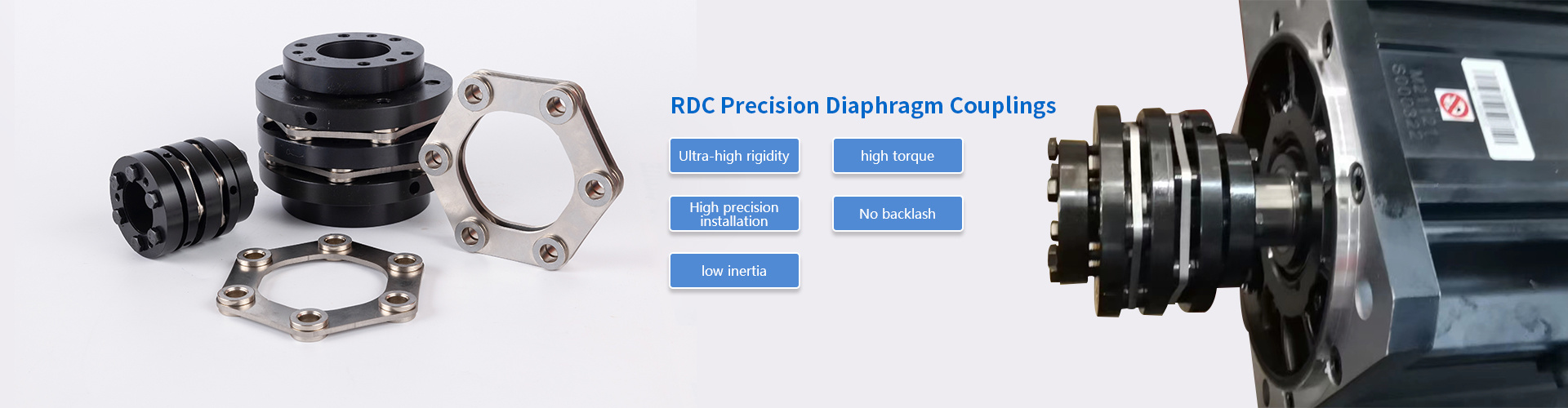
Diaphragm couplings are generally composed of engineering plastics or rubber, and their service life is elastic life. Since the diaphragm coupling is under compression and is obviously under tension. Generally, the life of the elastomer is 10 years. Since the elasticity has the function of buffering and damping, it is used more in the occasion of strong vibration. The performance limit temperature of the diaphragm coupling elastomer determines the operating temperature of the diaphragm coupling, which is generally -35 to +80 degrees.
Kunshan Haozong Transmission Technology Co., Ltd.
Contact: Manager Liu 13372152786 (WeChat)
Email: liu@hz-coupling.com
Address: Room A5-304, No. 18 Jinxing Road, Huaqiao Town, Kunshan City, Jiangsu Province

Scan the mobile website